 how-to
7 Ways to Transport Gelato Without Melting
Last Updated: October 29, 2026
Quick Summary
To transport gelato without melting, pre-chill the cooler for an hour, pack pints shoulder to shoulder with no empty space, and insulate the bottom and top with frozen packs or paper. Keep the lid closed and the cooler in the air-conditioned back seat, never the trunk.
- Gelato melts faster than ice cream because it holds less air and less fat.
- Fill a warm cooler with ice or frozen water bottles an hour before packing.
- A hard-sided cooler with a gasketed lid holds cold far longer than a soft bag.
- Never touch dry ice with bare skin or seal it in an airtight container.
- Wrap the container, not each pint, so cold can still reach the gelato.
Table of Contents
- Why Gelato Melts Faster Than Ice Cream in Transit
- How to Transport Gelato Without Melting: 7 Practical Moves
- The Best Insulated Containers for Frozen Desserts
- How to Use Dry Ice for Food Transport Safely
- Does Wrapping Gelato in a Blanket Actually Help?
- Gelato Catering Tips for Outdoor Events
- Timing Your Transport Around the Serve Window
- Book Electricity-Free Frozen Dessert Delivery for Your Event
- Frequently Asked Questions
Why Gelato Melts Faster Than Ice Cream in Transit
Gelato melts faster than ice cream in transit because it holds less air and less fat, so its structure collapses sooner once cold air escapes the container. A pint of gelato served at its ideal temperature sits in a narrow window. Push it a few degrees warmer and it turns to soup.
Ice cream is churned with more air and more butterfat. That air acts like insulation, and the fat coats the tongue and slows the melt. Gelato is denser and served warmer on purpose. That is what makes it silky. It is also what makes it fragile.
So when you transport gelato, you are not just fighting the weather. You are fighting the recipe.
- Gelato has less air, so it holds cold for a shorter time
- It is served at a softer temperature, so it has less margin before it slumps
- Dairy-free and vegan bases can be even more heat-sensitive
- Direct sun and a hot car trunk speed up the melt
Below, we show you how to transport gelato without melting, whether you are moving pints across town or setting up a catered event.
How to Transport Gelato Without Melting: 7 Practical Moves
The core method for how to transport gelato without melting is simple: pre-chill everything, pack tight, insulate the bottom and top, and keep the cooler out of heat. Seven moves cover the whole trip.
Here are the moves that matter most.
Chill the Cooler Before You Pack It
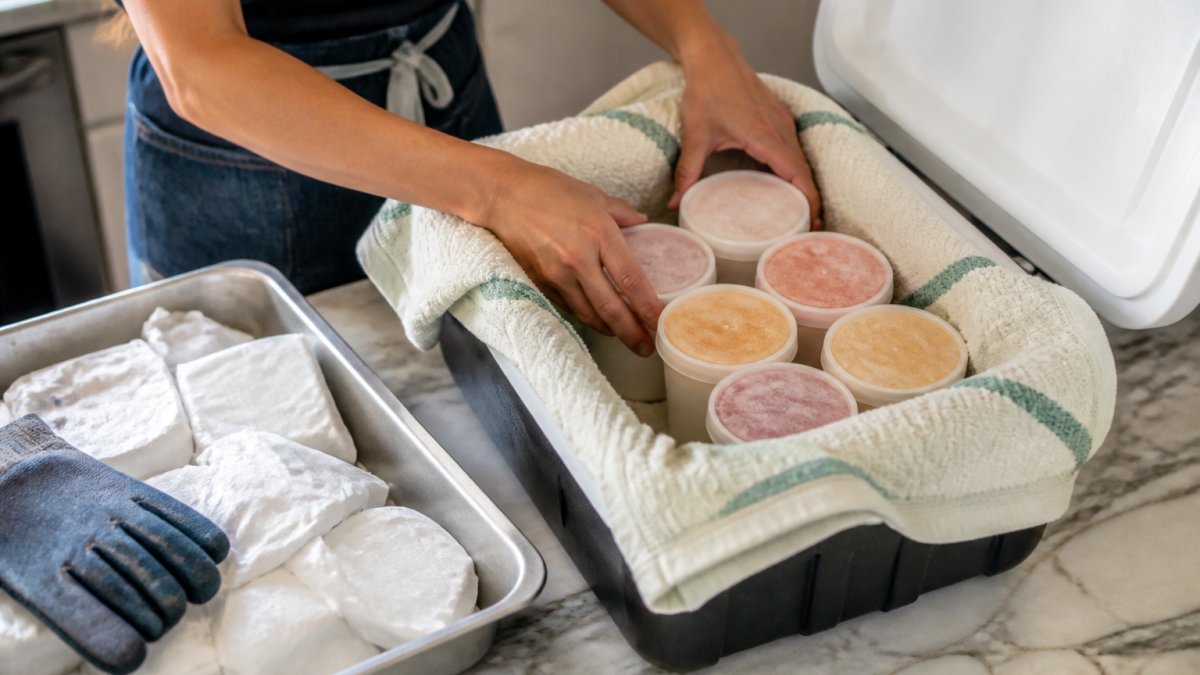
A warm cooler steals cold from your gelato in the first ten minutes. Fill it with ice or frozen water bottles an hour before you pack. Pour the water out, dry the inside, and load fast.
A common mistake is skipping this step on a hot day. The gelato pays for it.
Pack Gelato Tight and Fill the Empty Space
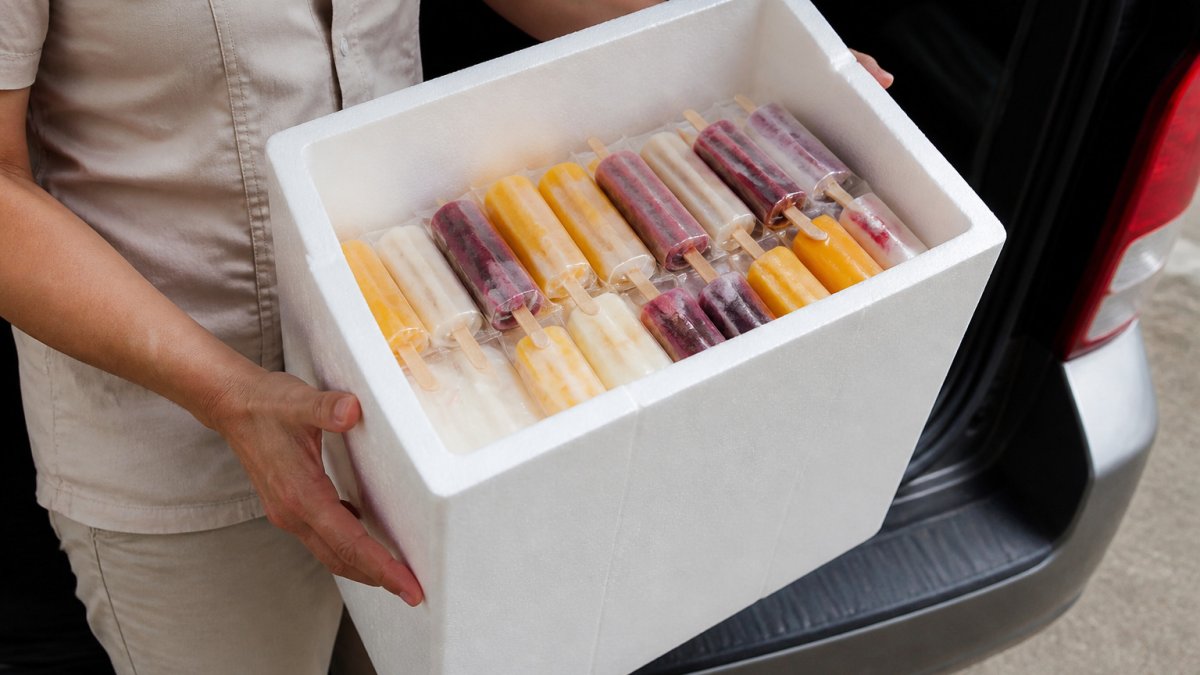
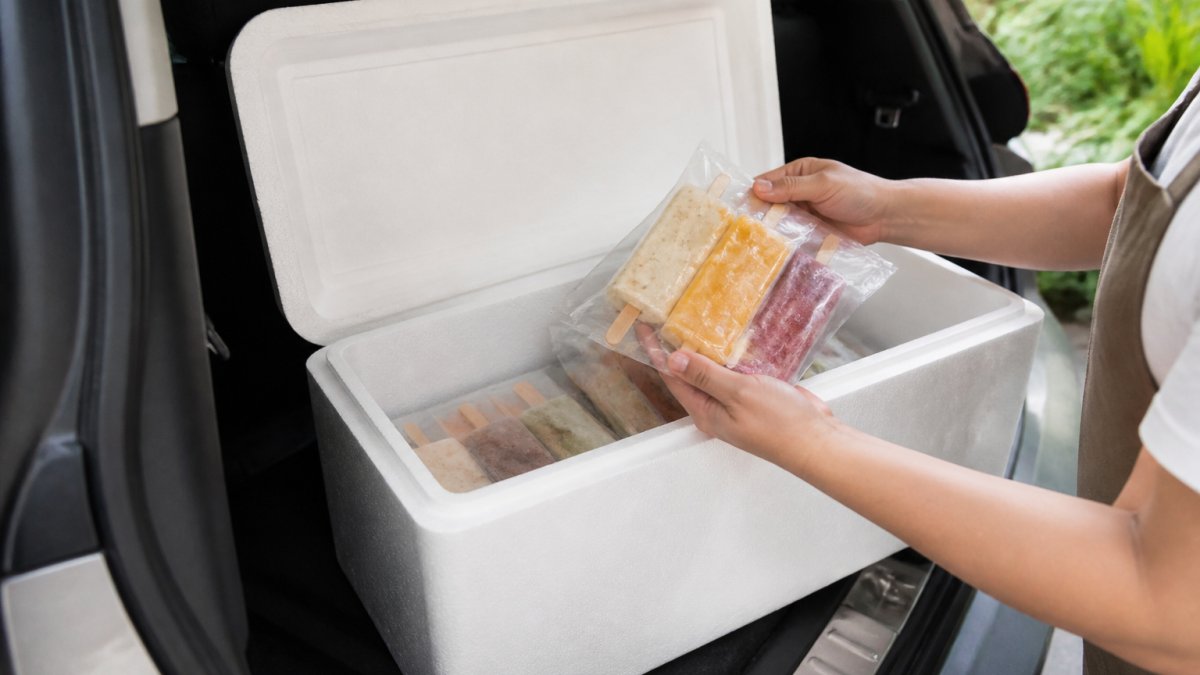
Air is the enemy. Empty space lets cold air move around and escape. Pack pints shoulder to shoulder. Crumple newspaper or add frozen gel packs to fill any gaps.
- Stack pints upright so lids stay sealed
- Fill every gap with frozen packs or paper
- Never leave a half-empty cooler
Keep the Lid Closed and the Cooler Out of the Trunk
The trunk is the hottest part of a car. Put the cooler in the back seat with the air conditioning on. Every time you open the lid, cold air spills out. Open it once at the destination, not at every stop. Minimizing temperature fluctuations remains the most effective strategy for preserving frozen desserts, a principle that applies equally well when keeping items cold outdoors during extended gatherings.
Watch out: leaving the cooler in a parked car in direct sun can undo an hour of careful packing in minutes.
The Best Insulated Containers for Frozen Desserts
The best insulated containers for frozen desserts are thick-walled hard-sided coolers, not soft bags. Look for a tight-sealing lid and a size that matches your load.
Soft-sided bags work for a short walk. They fail on a long drive. A hard cooler with a gasketed lid holds cold far longer.
| Container Type | Best For | Cold Retention | Watch Out For |
|---|---|---|---|
| Hard-sided cooler | Long drives, events | Strong | Heavy when full |
| Soft cooler bag | Short trips | Moderate | Thin walls, loose lids |
| Insulated box | Catering deliveries | Strong | Limited sizes |
| Foam chest | One-time moves | Good | Cracks easily |
If you are comparing options in detail, our guide to the best insulated containers for frozen desserts breaks down what to look for.
How to Use Dry Ice for Food Transport Safely
Dry ice keeps food frozen far longer than regular ice, but it needs handling rules. Never touch it with bare skin, never seal it in an airtight container, and never store it in a car cabin without ventilation.
- Wear gloves or use tongs
- Wrap it in paper, not plastic
- Keep a vent cracked so gas can escape
- Do not put it in a sealed cooler with a tight lid
- Do not place it directly against the gelato
The dry ice safety guidance from the Occupational Safety and Health Administration covers handling and ventilation. For a full method, read our guide on how to transport frozen desserts without electricity.
Does Wrapping Gelato in a Blanket Actually Help?
Yes, wrapping gelato in a blanket helps, but only in the right spot. A blanket does not make cold. It slows heat transfer.
Wrapping each pint in a thick blanket before it goes near ice is a common mistake. It blocks the cold from reaching the gelato. Insulate the container, keep the gelato close to the cold packs, and close the lid.
Gelato Catering Tips for Outdoor Events
Outdoor events are the hardest test for any frozen dessert. Heat, sun, and long serve windows all work against you. Plan the cold chain before the guests arrive.
Start with shade. Set the serving station out of direct sun, even if that means moving it mid-event. Serve in small batches and keep the rest closed.
- Pre-chill the serving containers
- Serve from a shaded, covered station
- Restock in small batches, not all at once
- Keep backup cold packs on hand
- Set a firm serve window and stick to it
For a step-by-step plan, see our guide on how to keep frozen desserts cold outdoors. A caterer who plans the cold chain will always beat one who hopes for the best.
Timing Your Transport Around the Serve Window
Timing is the lever most people ignore. Every minute between packing and serving eats into your cold buffer. Work backward from the serve time, not forward from the packing time.
Build in a buffer. If your cold source holds for a set number of hours, plan to arrive with time to spare. Do not pack at the last second and race the clock.
- Set the serve time first
- Subtract travel time and setup time
- Add a safety buffer
- Pack so the gelato arrives cold, not just on time
A cooler that holds cold for hours still loses ground if you open it early. Keep it sealed until setup, then open it once.
Book Electricity-Free Frozen Dessert Delivery for Your Event
The simplest way to transport gelato without melting is to let a specialist handle the cold chain. At Pepito's Paletas, our patented 8-hour frozen signature box keeps every order cold with no electricity and no bulky coolers.
We are a minority woman-owned co-op. Every paleta is made to order with healthy, vegan recipes rooted in traditional Mexican cooking. That means an elegant, sustainable dessert for your office, wedding, or client dinner, delivered fresh and ready to serve.
If you are planning a catered event, our electricity-free catering planning guide walks through the details. When you are ready, you can order now and lock in your delivery.
Frequently Asked Questions
What is the best way to keep gelato frozen for 4 hours?
Start with a pre-chilled hard-sided cooler, not a soft bag. Pack gelato pints tight against each other, fill every gap with frozen gel packs or crumpled newspaper, and keep the lid shut until serving. A quality cooler packed this way holds frozen desserts for about four hours in mild weather. On hot days, add a layer of dry ice on top and park the cooler in the shade or in air conditioning, never a hot trunk.
Can you use dry ice to transport gelato?
Yes, and it is the strongest option for long trips. Wrap dry ice in paper, never bare hands or a sealed plastic bag, and place it above the gelato since cold sinks. Allow about 5 to 10 pounds per cooler for a few hours of transport, and keep a vent cracked so gas can escape. Never store dry ice in a closed car cabin, and check with your carrier before flying with it.
How do professional caterers transport frozen desserts without electricity?
Caterers rely on pre-chilled insulated containers, a tight pack with minimal air space, and a short, planned route. Many use dry ice or frozen gel packs for longer holds and keep lids closed until the serve window. Some dessert suppliers go further: Pepito's Paletas delivers made-to-order vegan paletas in a patented 8-hour frozen signature box that keeps them frozen without electricity.
What are the best insulated containers for transporting gelato?
Hard-sided rotomolded coolers hold cold longest and are the top pick for anything over an hour. For shorter trips, thick-walled hard plastic coolers with a gasketed lid work well. Look for a tight-sealing lid, thick insulation, and a size that matches your load, since a half-empty cooler loses cold fast. Skip thin soft-sided bags for gelato unless the trip is under 30 minutes and the bag is packed full with frozen packs.
Your guests will remember the dessert that arrived perfectly frozen, not the one that melted on the table. Pepito's Paletas handles the cold chain for you with a patented 8-hour frozen box, made-to-order vegan paletas, and electricity-free delivery built for luxury events and offices. Get started with Pepito's Paletas and serve a dessert that arrives as good as it left our kitchen.