 how-to
Transport Frozen Desserts Without Electricity
Last Updated: October 26, 2026
Quick Summary
Transport frozen desserts without electricity by using a premium insulated cooler with ice packs or dry ice, pre-chilling your container and desserts, and wrapping each item individually. With proper preparation, frozen desserts stay frozen for 4-6 hours using ice packs or 8-12+ hours using dry ice.
- Premium insulated coolers with ice packs keep desserts frozen for 4-6 hours in ideal conditions
- Dry ice maintains ultra-low temperatures and extends cold duration to 8-12+ hours without creating liquid water
- Always wear insulated gloves when handling dry ice and leave cooler lid cracked to prevent dangerous CO2 buildup
- Pre-chill coolers and desserts before packing to double your cold duration
- Wrap each dessert individually and position ice packs around the perimeter, not directly touching items
Table of Contents
- Why Transporting Frozen Desserts Without Electricity Matters
- Choosing the Best Cooler for Transporting Frozen Food
- Preparing Your Frozen Desserts Before Transport
- How Long Does Ice Cream Stay Frozen in a Cooler
- Using Ice Packs and Gel Packs for Cold Chain Maintenance
- How to Use Dry Ice to Transport Frozen Food
- How to Transport an Ice Cream Cake Without Melting
- Common Mistakes to Avoid During Transport
- Frequently Asked Questions
Why Transporting Frozen Desserts Without Electricity Matters
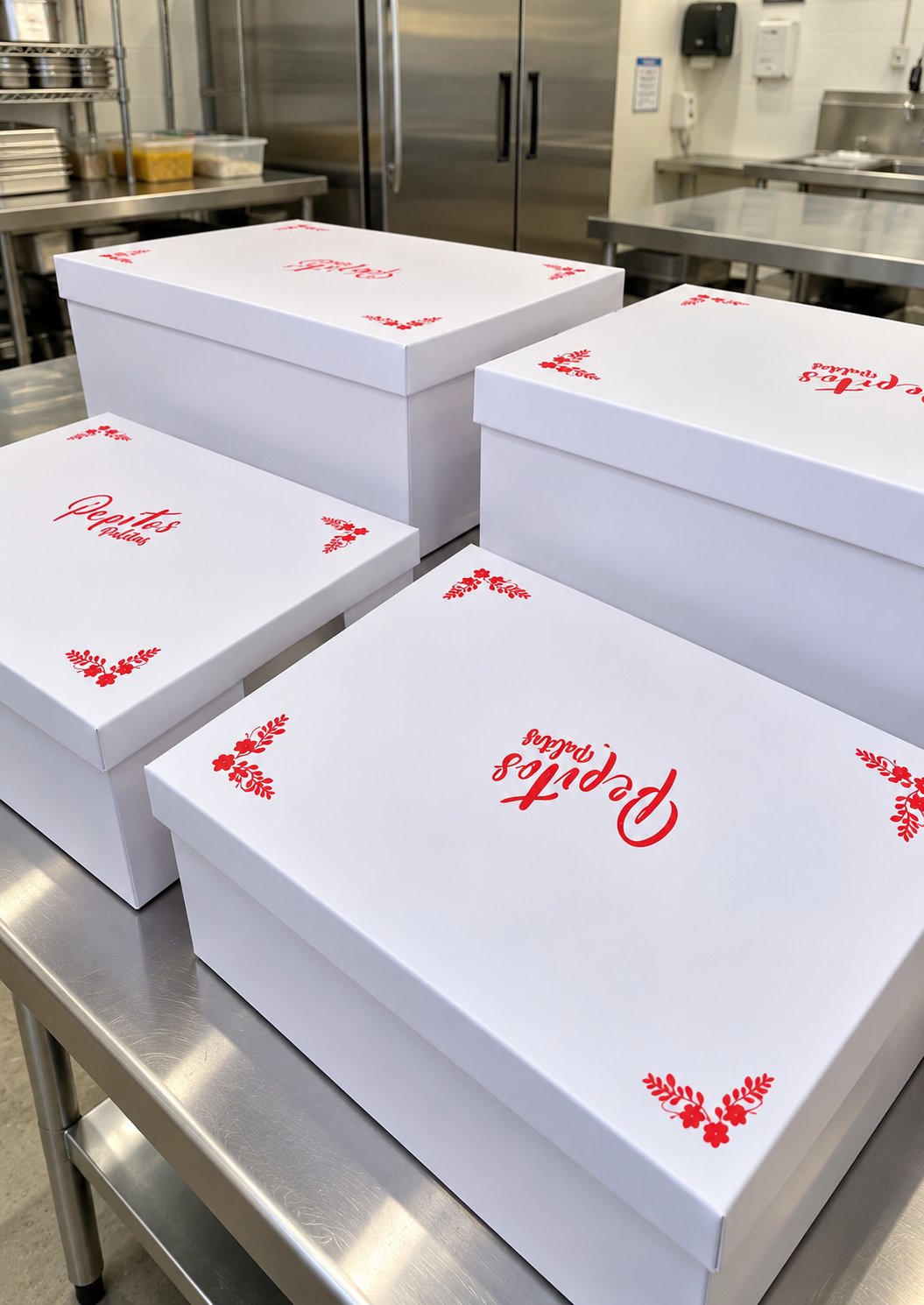
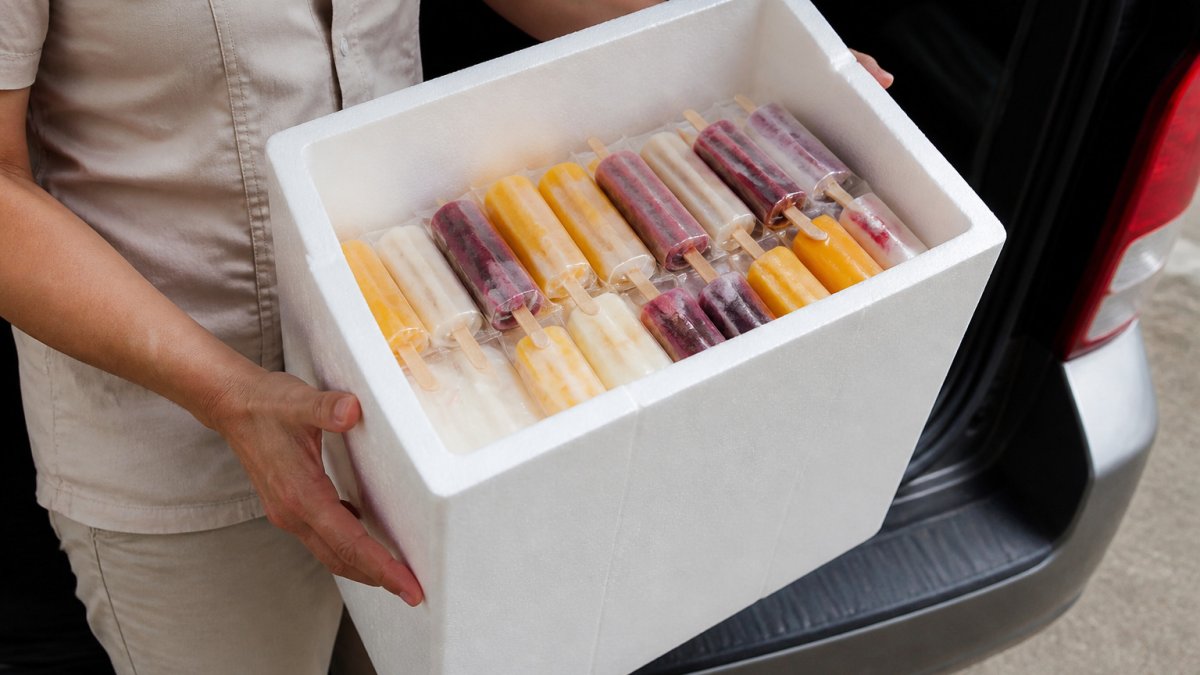
Frozen desserts melt. That's the problem you're solving. At Pepito's Paletas, our patented 8-hour frozen signature box is designed to keep gourmet paletas frozen during transport without relying on electricity or bulky coolers. The challenge isn't theoretical, it's practical. You're planning an outdoor wedding in July, a corporate event in a park, or a private celebration where traditional refrigeration simply isn't an option. Electricity Free Catering for Events: A Planning Guide explores the broader context of event planning without electrical infrastructure.
The stakes are real. A melted dessert isn't just disappointing. It's a failed catering moment that guests remember. For event planners and office managers, it's the difference between an elegant closing course and a puddle of disappointment.
Here's what changes everything: understanding that transport frozen desserts effectively without electricity isn't about fighting physics, it's about working with it.
Choosing the Best Cooler for Transporting Frozen Food
The container you choose matters. Consider the needs of your event when selecting a container. Best Insulated Containers for Frozen Desserts provides specific product recommendations to help you choose.
What makes a cooler work:
- Double-wall insulation (at least 2 inches thick)
- Airtight seals that minimize air exchange
- Reflective or light-colored exterior to reject heat
- Proper dimensions to fit your dessert quantity without excess empty space
Check our specialized vessels and equipment designed for frozen dessert transport(page:4)
Preparing Your Frozen Desserts Before Transport
Success begins before you pack. Preparation determines whether your desserts arrive frozen or compromised.
Pre-chilling your containers and desserts
The thermal mass concept: frozen items inside a cold container create a stable cold zone. Warm containers fight against this stability. You're essentially starting a race, the colder your starting point, the longer your desserts stay frozen.
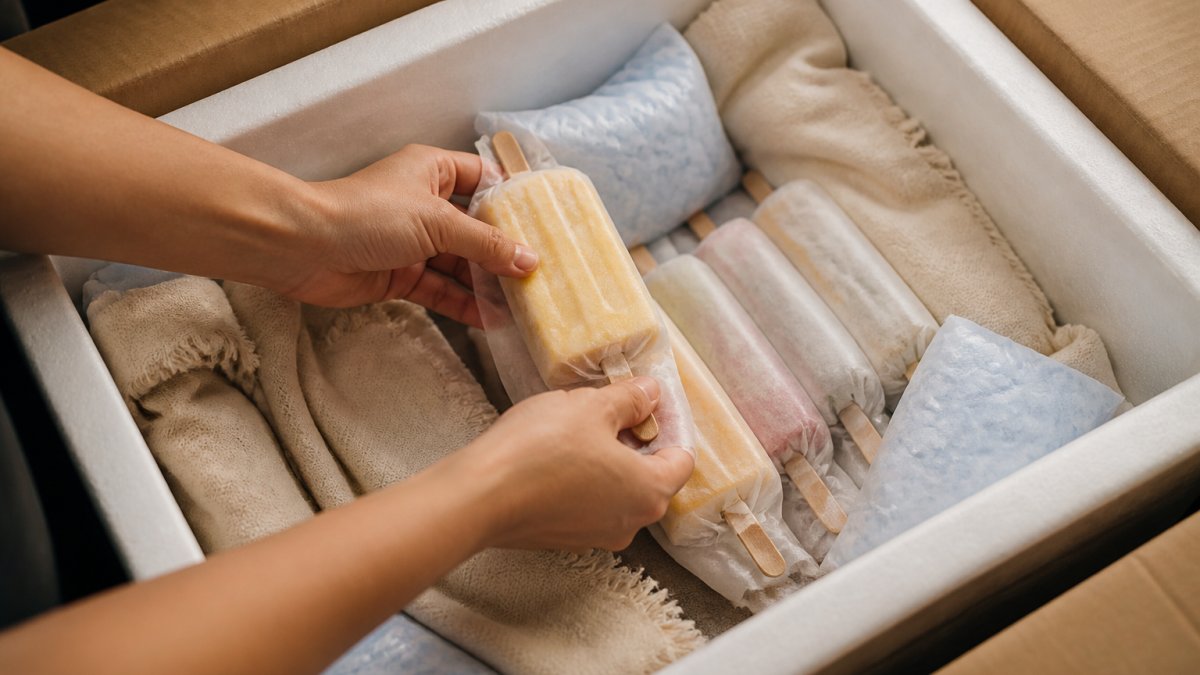
Wrapping for maximum insulation
The wrapping strategy:
- Wrap each dessert individually in parchment or food-grade plastic wrap
- Add a layer of aluminum foil (reflects radiant heat effectively)
- For ice cream cakes or larger items, use multiple blankets or insulated sleeves
- Never leave desserts exposed directly to cooler walls
How Long Does Ice Cream Stay Frozen in a Cooler
Duration depends on five variables: cooler quality, cooling method, ambient temperature, packing density, and how often you open the lid.
In ideal conditions:
- Premium insulated cooler with ice packs: 4-6 hours
- Standard cooler with ice packs: 2-4 hours
- Cooler with dry ice: 8-12+ hours
- Cooler without cooling medium: 1-2 hours
These timelines assume you're not opening the cooler repeatedly. Each time you lift the lid, warm air enters and cold air escapes. A single 30-second opening can reduce your remaining time by 15-20 minutes.
Cold duration varies significantly based on your cooler type and cooling method.
| Cooler Type | Duration | Conditions |
|---|---|---|
| Premium insulated with ice packs | 4-6 hours | Ideal conditions |
| Standard cooler with ice packs | 2-4 hours | Ideal conditions |
| Cooler with dry ice | 8-12+ hours | Ideal conditions |
| Cooler without cooling medium | 1-2 hours | Ideal conditions |
Using Ice Packs and Gel Packs for Cold Chain Maintenance
Ice packs and gel packs are your primary cooling tools. They maintain the cold environment that keeps desserts frozen.
Ice packs:
- Reusable plastic packs filled with water or gel
- Freeze solid before use (typically 24 hours)
- Provide consistent, reliable cooling
- Cost-effective and durable
- Work well for trips up to 6 hours
Gel packs:
- Pre-filled gel that freezes at lower temperatures than water
- Stay cold longer than standard ice packs
- More expensive but reusable
- Better for extended transport
- Gel doesn't leak if punctured (unlike ice)
The placement strategy matters as much as the packs themselves. Position them around the perimeter of the cooler, not directly touching desserts. Ice packs create cold zones, the coldest areas are immediately adjacent to them. Wrapping desserts in blankets creates a buffer that distributes cold more evenly.
How to Use Dry Ice to Transport Frozen Food
Dry ice is extreme cooling. It maintains temperatures well below standard ice and extends cold duration significantly.
Dry ice is solid carbon dioxide. It sublimates, turns directly from solid to gas, at minus 109 degrees Fahrenheit (Sublimation and the Water Cycle). This extreme cold creates a powerful cooling effect that standard ice simply can't match.
Why dry ice works:
- Maintains ultra-low temperatures for 8-12+ hours
- Doesn't create liquid water (no soggy desserts)
- Takes up minimal space for maximum cooling power
- Ideal for long-distance transport or outdoor events in extreme heat
Safety precautions when handling dry ice
Dry ice demands respect. Improper handling causes injury.
Never touch dry ice with bare hands. It causes instant frostbite. Always wear insulated gloves or use tongs. Frostbite from dry ice happens faster than from regular ice, the extreme cold burns skin immediately.
Ensure adequate ventilation. As dry ice sublimates, it releases carbon dioxide gas. In sealed spaces, CO2 buildup becomes dangerous. Never seal a cooler completely with dry ice inside, leave the lid cracked slightly or use a cooler with ventilation holes. A sealed container can build pressure and become unsafe.
Keep dry ice away from children and untrained people. Label the cooler clearly if dry ice is inside. Curious fingers reaching into a cooler with dry ice will be injured.
Use proper quantities. Too much dry ice creates excessive sublimation and wasted cooling power. Too little defeats the purpose. Generally, 1-2 pounds of dry ice per 20-30 servings works effectively.
Never ingest or inhale dry ice vapors. This seems obvious but accidents happen. The CO2 gas can cause respiratory distress.
Wrap dry ice in newspaper or cloth. Direct contact between dry ice and desserts freezes them too rapidly and can damage texture. A thin barrier prevents this while maintaining cooling effectiveness.
Dry ice is available at many grocery stores, ice cream shops, and specialty retailers. Purchase it as close to your event as possible, it sublimates continuously, so older dry ice has lost cooling capacity.
How to Transport an Ice Cream Cake Without Melting
Ice cream cakes present a specific challenge. They're larger, more delicate, and more visible than individual desserts.
Pre-chill aggressively. Freeze the cake for at least 8 hours before transport. It should be completely solid throughout. A partially frozen interior will thaw during the journey.
Use a cake box designed for transport. Standard bakery boxes provide minimal insulation. Invest in an insulated cake carrier or place the boxed cake inside your primary cooler. The double-layer approach works exceptionally well.
Minimize handling. Ice cream cakes are sensitive to vibration and movement. Pack them securely so they don't shift during transport. Movement generates friction and heat. A stable cake stays frozen longer. Proper structural support becomes even more critical when shipping frozen cakes over longer distances where external conditions are harder to control.
Keep the cake level. Tilting or angling a cake accelerates melting on the lower side. Transport it flat and level.
Add extra cooling around the cake. Use more ice packs around an ice cream cake than you would for individual desserts. The larger mass requires more surrounding cold to maintain temperature.
Avoid opening the cooler. This applies to all desserts but especially ice cream cakes. Every opening compromises the cold environment. Plan your transport route to minimize stops and delays.
Time your transport strategically. If possible, move the cake during cooler parts of the day, early morning or late evening. Avoid midday heat when ambient temperatures peak.
Common Mistakes to Avoid During Transport
Most failures stem from preventable errors.
Mistake 1: Undersizing the cooler. A cooler that's too small forces you to pack desserts tightly with minimal insulation around them. The result is uneven cooling and faster thawing. Choose a cooler larger than you think you need.
Mistake 2: Neglecting pre-chilling. Starting with a warm cooler and room-temperature desserts is fighting a losing battle. Pre-chill everything. This single step doubles your cold duration.
Mistake 3: Opening the cooler repeatedly. Each opening is a reset button on your cold chain. Resist the urge to check on desserts. If you must open it, do so quickly and minimize air exchange.
Mistake 4: Packing too loosely. Empty space in a cooler becomes a liability. Air circulates and conducts heat. Pack tightly with blankets filling gaps. A full cooler maintains temperature better than a half-full one.
Mistake 5: Using inadequate cooling medium. One small ice pack in a large cooler won't sustain cold for extended periods. Use enough cooling packs to surround desserts completely. More is better than less.
Mistake 6: Ignoring ambient temperature. A strategy that works on a 70-degree day fails on a 95-degree day. Adjust your approach based on weather. Use more ice packs, add dry ice, or reduce transport time in extreme heat.
Mistake 7: Placing coolers in direct sunlight. Heat enters through the exterior. Position coolers in shade whenever possible. A cooler in a car trunk stays cooler than one in direct sun.
Mistake 8: Transporting warm desserts. A dessert that's not completely frozen before packing will thaw faster. Freeze everything solid. No shortcuts here.
Transporting frozen desserts without electricity is possible with Pepito's Paletas' patented 8-hour frozen signature box.
At Pepito's Paletas, we've engineered our patented 8-hour frozen signature box to handle exactly this challenge, keeping gourmet vegan paletas frozen during transport without electricity or bulky coolers. Learn about electricity-free catering solutions to learn more. Get a quote and discover how our made-to-order paletas can elevate your next event.
Frequently Asked Questions
How long can frozen desserts stay frozen in an insulated cooler?
Pepito's Paletas delivers paletas fresh in its patented 8-hour frozen signature box for electricity-free catering. Get a quote for your event.
Is it safe to use dry ice to transport frozen food?
Pepito's Paletas offers electricity-free catering using its patented 8-hour frozen signature box.
What's the best way to pack an ice cream cake for transport?
Pepito's Paletas makes made-to-order gourmet vegan paletas and delivers them fresh in its patented 8-hour frozen signature box.
How do I minimize melting during a frozen dessert delivery?
Pepito's Paletas delivers fresh paletas in its patented 8-hour frozen signature box for an electricity-free catering experience.