 how-to
How to Plan Vegan Boxed Lunches for Corporate Events
Last Updated: October 25, 2026
Quick Summary
Plan vegan boxed lunches for corporate events by collecting dietary needs on the RSVP, ordering one box per guest plus 5 to 10 percent extra, and confirming headcount 5 business days out. Build each box with 4 to 6 ounces of protein, 1 to 1.5 cups of complex carbs, and label every box with its diet and full allergen list.
- Close the dietary needs form 10 business days before the event so the caterer can source and label.
- For a 40-person meeting, order 42 to 44 boxes to cover unannounced attendees.
- Wraps beat sliced bread in boxes because they hold fillings tighter and resist sogginess.
- Keep perishable cold food below 40°F and out of temperature control no more than two hours.
- Match vegan boxes to standard boxes in component count, container, and dessert format for parity.
Table of Contents
- Why Vegan Boxed Lunches Belong at Your Next Corporate Event
- Vegan Lunch Ideas for Work That Hold Up in a Box
- Handling Corporate Catering Dietary Restrictions Without Chaos
- Boxed Lunch Catering for Meetings: A Planning Checklist
- Menu Templates for Balanced Vegan Boxed Lunches
- Allergen Management and Cross-Contact Prevention
- Budgeting, Delivery, and Food Safety for Boxed Meals
- Request a Quote for Your Next Office Lunch
- Frequently Asked Questions
Why Vegan Boxed Lunches Belong at Your Next Corporate Event
Vegan boxed lunches for corporate events solve a problem most planners meet the hard way: one guest with a plant-based diet, one nut allergy, and one gluten restriction, all at the same table.
The numbers back the trend. According to Pew Research Center's findings on vegetarian and vegan Americans, roughly one in ten adults avoids meat entirely, and a much larger group eats plant-based food some of the time.
Keep reading, because below we break down the menu ideas that travel well, the planning checklist that prevents day-of chaos, and the allergen rules that keep every guest safe.
Vegan Lunch Ideas for Work That Hold Up in a Box
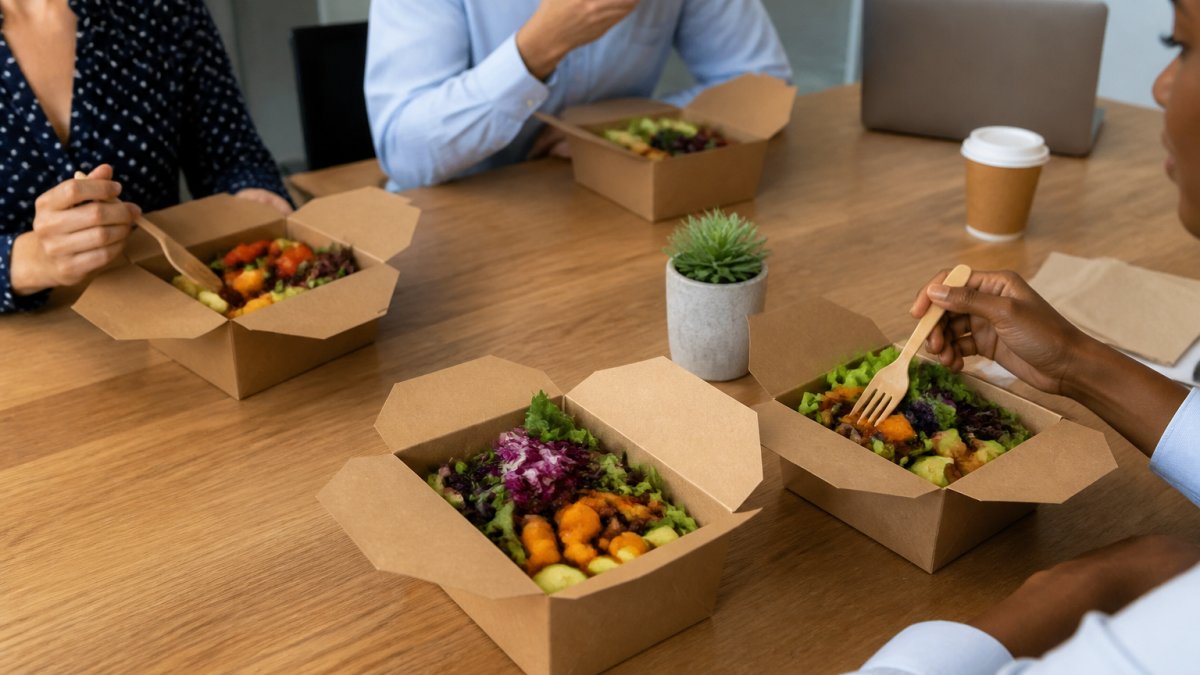
The best vegan lunch ideas for work survive a few hours in a box without wilting, leaking, or turning mushy. That rules out anything drenched in dressing or loaded with watery vegetables. Structure matters more than creativity here.
Sandwiches, Wraps, and Pita Pockets
Wraps beat sandwiches for boxed catering. A whole wheat tortilla or pita bread holds fillings tighter than sliced bread, which goes soggy fast. Good fillings include:
- Hummus with roasted red pepper and spinach
- Smashed chickpea salad with celery and dill
- Grilled tofu with pickled onions and greens
Pack wet ingredients separately. A small cup of dressing on the side keeps the wrap crisp until lunch.
Rice Bowls, Salads, and Protein-Rich Fillings
Rice bowls handle travel better than leafy salads. Build them on a base of brown rice, quinoa, or farro, then add beans, tofu, or lentils for protein. Roasted vegetables hold their texture for hours.
Leafy salads still work if you layer them right. Put sturdy greens like kale on the bottom and keep the dressing separate. Fresh fruit is a smart side because it needs no refrigeration and adds color to the box.
Handling Corporate Catering Dietary Restrictions Without Chaos
Corporate catering dietary restrictions break down into four common categories: vegan, vegetarian, gluten-free, and allergen-specific. The mistake most planners make is collecting this information too late. Ask on the RSVP, not the week of the event.
Build a simple system:
- One box, one label. Every box states the diet it serves and its full allergen list.
- Color-coded stickers. Green for vegan, yellow for vegetarian, red for allergen-restricted. Guests find their box in seconds.
- A master sheet. One page listing every guest, their restriction, and their box number.
Customized meals don't have to mean separate orders. A base vegan box can serve most guests, with small swaps for gluten-free or nut-free needs. That keeps the menu simple and the caterer's job manageable.
Ordering from a caterer that already builds diet-specific menus saves hours of back-and-forth. Our vegan catering buyer's guide walks through what to ask before you commit.
Boxed Lunch Catering for Meetings: A Planning Checklist
Boxed lunch catering for meetings works best when you plan backwards from the delivery time. Most planners who get burned do so because they collect dietary needs late, guess at quantities, or assume the caterer will handle setup. This checklist closes those gaps with a sequence, a quantity formula, and day-of contingencies. Refining these logistical details ensures that your catering strategy remains aligned with the broader scope of corporate meeting planning.
Phase 1: Six to four weeks out
- Lock the date, headcount range, and room. Confirm whether the room has a service entrance, elevator access, and table space for staging boxes.
- Collect dietary needs on the RSVP, not by email later. Ask for vegan, vegetarian, gluten-free, and allergen-specific needs in one field, with a firm cutoff date. A common pattern is to close the form 10 business days before the event so the caterer can source and label.
- Decide the box format. A single vegan box for everyone is simplest and most inclusive; a split menu with vegan, standard, and allergen-specific boxes requires more labeling and usually a higher per-box handling charge.
Phase 2: Two weeks to five business days out
- Confirm the final headcount 5 business days out. Most caterers set their order cutoff at 3 to 5 business days; missing it can mean substitutions or rush fees.
- Estimate quantities with a buffer. Order one box per confirmed guest plus 5 to 10 percent extra. For a 40-person meeting, that means 42 to 44 boxes. Round up rather than down; an unannounced attendee or a dropped box is harder to fix than a spare.
- Ask how each box is labeled and sealed. Every box should state the diet it serves and its full allergen list, and be sealed so guests can trust the contents.
Phase 3: Day before and day of
- Reconfirm the delivery address, dock access, and contact number a day ahead. A caterer who cannot reach your floor on time turns a smooth lunch into a fire drill.
- Print the master dietary sheet for the check-in table, listing each guest, their restriction, and their box label.
- Stage boxes by diet in separate zones so guests can find their box in seconds and cross-contact stays low.
That last item matters. Someone always shows up unannounced, and a spare box prevents an awkward scramble. Confirm the delivery address and dock access a day ahead, too.
The checklist runs on a fixed timeline, and these are the deadlines and quantities that keep it on track.
| Item | Value | Note |
|---|---|---|
| Dietary form cutoff | 10 business days before event | Close the RSVP form so caterer can source and label |
| Final headcount confirmation | 5 business days out | Most caterers set order cutoff at 3 to 5 business days |
| Extra boxes to order | 5 to 10 percent above confirmed guests | 40-person meeting means 42 to 44 boxes |
| Cold-holding temperature | Below 40°F | Ask how cold items stay cold in transit and on site |
| Time out of temperature control | No more than two hours | Keep unserved boxes in a cooler or refrigerator |
| Quotes to request | Two or three caterers | Ask for food, delivery and setup, and labeling broken out |
Menu Templates for Balanced Vegan Boxed Lunches
A balanced vegan box hits four notes: protein, complex carbs, vegetables, and something fresh. The templates below add what most menu lists skip: portion targets, swap options for common restrictions, and a parity note so vegan boxes feel as substantial as the standard option.
Portion targets that keep guests full
Use these as a starting point when briefing a caterer. They are common catering benchmarks, not rigid rules.
- Protein: 4 to 6 ounces of tofu, tempeh, beans, or lentils per box
- Complex carbs: 1 to 1.5 cups of cooked rice, quinoa, farro, or a whole-grain wrap
- Vegetables: 1 to 1.5 cups, including at least one roasted or sturdy item
Portion the protein generously. A box that leaves guests hungry undercuts the whole point of inclusive catering.
Template A: The Wrap Box
- Whole wheat wrap with hummus and roasted vegetables (4 to 6 ounces of filling)
- Side of tabbouleh salad (1/2 cup)
- Small cup of mixed beans (1/2 cup)
Swaps: Use a gluten-free wrap or a lettuce cup for gluten-free guests. Replace hummus with a seed-based spread for sesame allergies. Choose a nut-free dessert by default.
Template B: The Bowl Box
- Brown rice or quinoa base (1 to 1.5 cups)
- Grilled tofu or lentil filling (4 to 6 ounces)
- Roasted seasonal vegetables (1 cup)
Swaps: Swap pita for a gluten-free cracker or extra roasted vegetables. Use a chickpea-flour wrap instead of pita for a gluten-free, sesame-free option. Keep dressing in a separate cup so the bowl does not go soggy.
Template C: The Mixed-Diet Parity Box
When vegan and standard boxes share a table, presentation matters as much as ingredients. Build the vegan box with the same number of components, the same container, and the same dessert format as the standard box so it does not read as an afterthought.
- Grain and protein base (quinoa with lentils or grilled tofu)
- Roasted vegetable side
- Small hummus cup with vegetable sticks
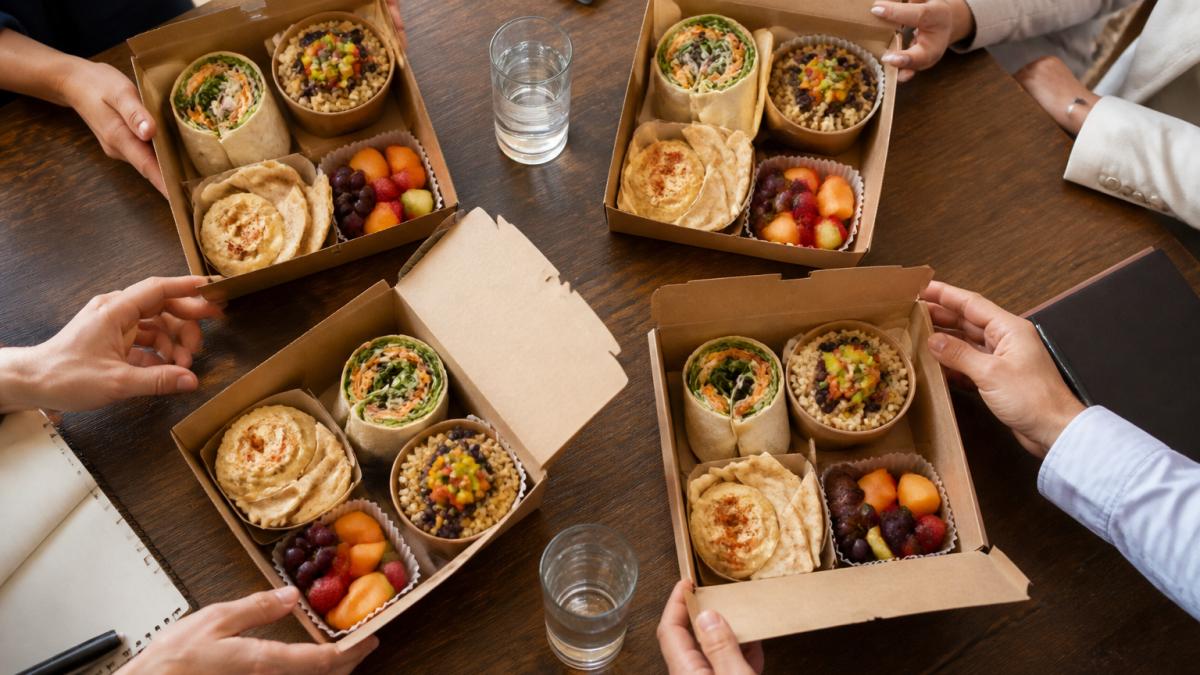
Both templates keep well for hours and need no reheating. Brief the caterer on portion targets and swaps in writing so the kitchen builds every box the same way.
Allergen Management and Cross-Contact Prevention
Allergen safety is where boxed catering earns or loses trust. Cross-contact happens when a utensil, surface, or glove carries one ingredient into another dish. For a guest with a severe allergy, that trace amount can be dangerous.
Ask your caterer these questions before booking:
- Is there a dedicated prep area for allergen-free boxes?
- Are separate utensils and cutting boards used?
- Are all boxes sealed and labeled with full ingredient lists?
The FDA guidance on food allergen labeling sets the standard for how major allergens must be declared. A serious caterer will answer these questions without hesitation. If they can't, walk away.
Budgeting, Delivery, and Food Safety for Boxed Meals
Per-person cost for vegan boxed lunches depends on portion size, ingredient quality, delivery distance, and how many custom boxes you need. Pricing varies widely by caterer and event size, so request a written quote rather than guessing from a menu.
Delivery logistics decide whether the food arrives in good shape. Confirm these details in writing:
- Exact delivery window and a contact on site
- Whether setup and breakdown are included
- How cold items stay cold during transport
Food safety follows the same principle. The USDA food safety guidelines recommend keeping perishable cold food below 40°F and not leaving it out for more than two hours.
Request a Quote for Your Next Office Lunch
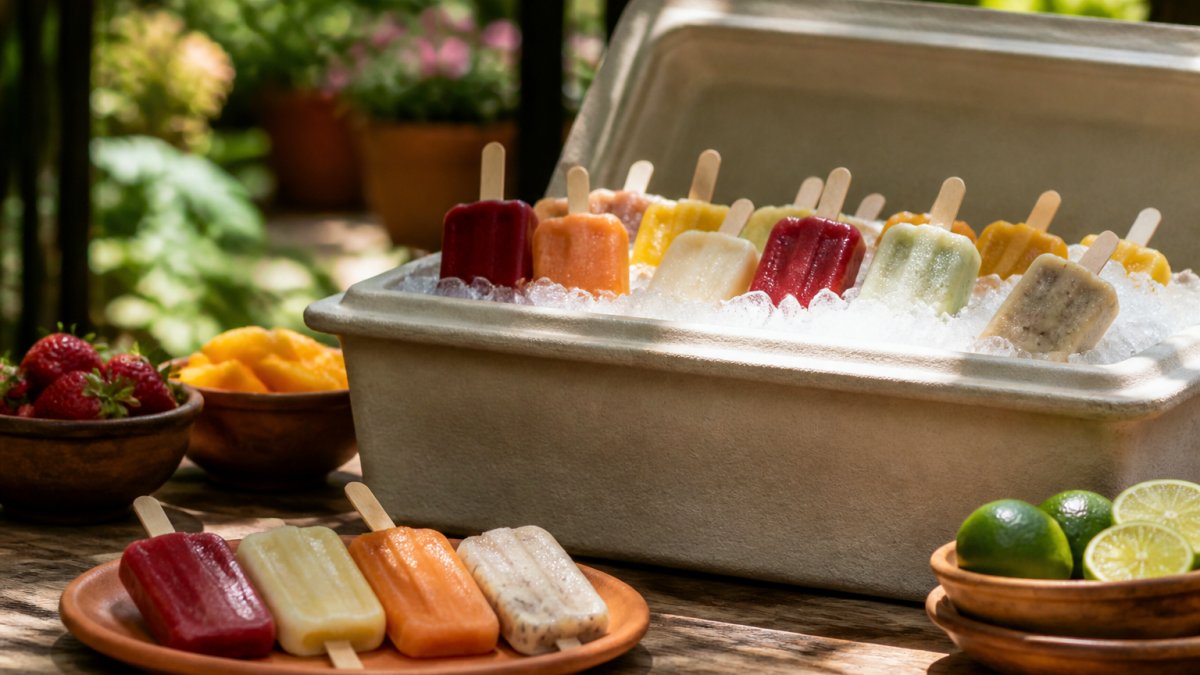
Planning inclusive catering takes real coordination, and dessert is usually the last thing anyone thinks about. That's where we come in.
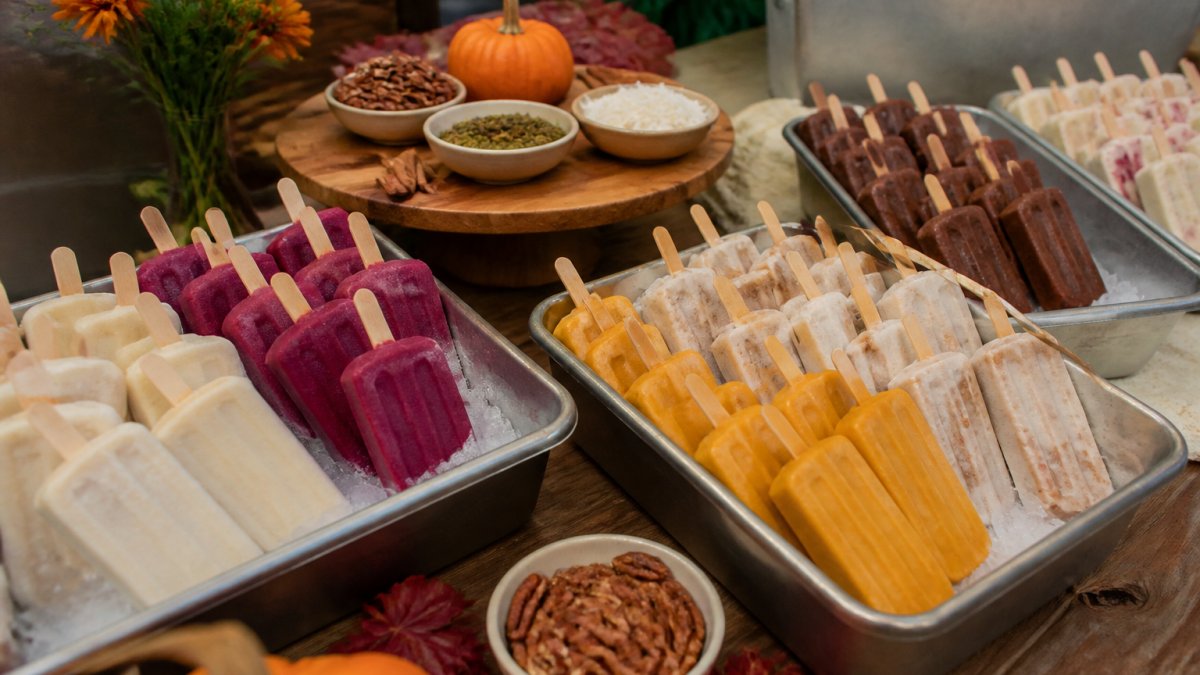
We're a minority woman-owned co-op, and every order supports hands-on business training for women entrepreneurs. Our paletas give your guests a plant-based dessert that feels elegant, not like an afterthought.
Get a quote from Pepito's Paletas and give your next office lunch a dessert everyone can enjoy.
Frequently Asked Questions
What should a vegan boxed lunch include?
A balanced vegan boxed lunch pairs a protein source with a grain, vegetables, and fruit. Think a chickpea salad wrap, brown rice bowl with tofu and roasted vegetables, or hummus with pita and a side salad. Add fresh fruit and a dairy-free dessert to round it out. Beans, tofu, lentils, and nuts cover protein so guests stay full through an afternoon session. Label each box clearly and include an ingredients card so guests with additional restrictions can check before eating.
How do you order vegan boxed lunches for a corporate event?
Start by confirming your headcount and collecting dietary needs through your RSVP or registration form, then set a final number two to three business days before the event. Ask the caterer how they handle cross-contact, whether boxes are individually labeled, and what delivery window they offer. For vegan boxed lunches, confirm the entire box is plant-based rather than a single vegan item added to a standard box. Get the quote in writing with per-person pricing and delivery fees included.
How many boxed lunches should you order for a work event?
Order for your confirmed attendees plus a small buffer, usually 5 to 10 percent extra, to cover walk-ins and last-minute additions. If your RSVP list is soft, round up rather than down; running out of food is harder to recover from than a few leftovers. Track dietary counts separately so you know exactly how many vegan boxes you need. Caterers typically set minimum order quantities, so confirm those thresholds before you finalize the count.
How should vegan boxed lunches be labeled for an office event?
Label every box with the meal type, the main ingredients, and the top allergens it contains. Use a distinct color sticker or tag for vegan boxes so guests and staff can spot them without opening lids. Include a small card inside listing full ingredients, since some guests avoid specific items beyond animal products. Clear labeling reduces mix-ups during distribution and lets guests with multiple restrictions self-check before they eat.