 how-to
Can You Keep Food Warm Without Electricity?
Last Updated: October 28, 2026
Quick Summary
You can keep food warm without electricity using insulated containers, chafing dishes with gel or wick fuel, hot-water baths, retained-heat thermal cookers, and heated bricks or stones. Preheat containers first and heat food to serving temperature before it goes in, since insulation only slows heat loss. Hold hot food at or above 140°F and never between 40°F and 140°F for more than two hours.
- Most insulated containers hold food warm for two to four hours; thin foam coolers last about one hour.
- Preheat containers with hot water for five minutes, fill them to the top, and keep lids on until serving.
- A chafing dish holds heat for two to three hours per fuel can; check the water pan every hour.
- Reheat leftovers to 165°F before moving them to a warmer, and discard food left out over two hours.
- During a power outage, fill thermal carriers while food is still hot and wrap them in blankets.
Table of Contents
- How to Keep Food Warm Without Electricity: 7 Methods That Work
- Non-Electric Food Warmers: A Side-by-Side Comparison
- How Long Food Stays Warm in an Insulated Container
- Food Safety Temperature for Hot Holding: The 140°F Rule
- Keeping Food Warm for Parties and Events: Setup and Heat-Retention Techniques
- Emergency and Off-Grid Scenarios: Keeping Food Warm During a Power Outage
- Planning an Electricity-Free Dessert Station for Your Next Event
- Frequently Asked Questions
How to Keep Food Warm Without Electricity: 7 Methods That Work
You can keep food warm without electricity using insulated containers, chafing dishes, thermal carriers, and a few smart packing tricks.
Here's the good news: most of these methods use gear you may already own. And the ones that don't are cheap to buy.
We'll also show you how long each method holds heat, which dishes suit which method, and the food safety rule that keeps guests safe.
Insulated Serveware and Thermal Containers
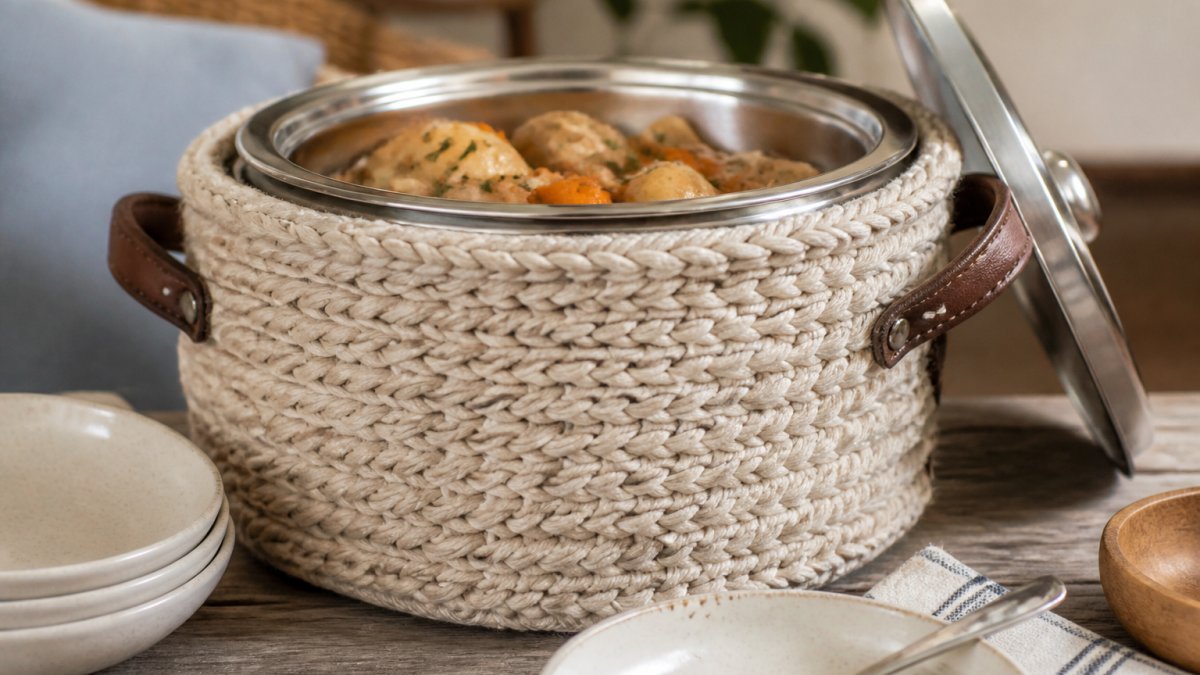
Insulated serveware is the simplest way to keep food warm without electricity. You can browse the vessels and equipment we offer to see the insulated serveware discussed here. A good thermal container traps heat with a double wall or thick foam layer, so food holds its temperature for hours with no power source at all.
Here's how to get the most from passive heat retention:
- Preheat the container first. Fill it with hot water for five minutes, then dump and dry it.
- Heat the food to serving temperature before it goes in. Insulation holds heat; it doesn't create it.
- Fill containers to the top. Air space speeds heat loss.
- Keep lids on until serving. Every open minute costs heat.
A common mistake is loading cold food into a hot carrier and expecting it to warm up. It won't. Insulation only slows heat loss.
Chafing Dishes and Fuel-Based Warming
Chafing dishes are the standard for buffet lines. A water pan sits under the food pan, and chafing fuel, usually a gel or wick can, heats the water to a gentle steam.
Setup matters more than the equipment:
- Fill the water pan about two-thirds full.
- Light the fuel can and place it under the pan.
- Add hot water, not cold, so heat builds fast.
- Keep the lid on between servings.
Watch out: running a chafing dish dry can warp the pan and scorch food. Check the water level every hour.
Fuel-based warming works well for hot dishes at parties. It's less useful for transport, since the setup doesn't travel well.
Ovens, Warming Drawers, and Slow Cookers
Gas ovens, warming drawers, and slow cookers all keep food hot, but only the gas oven truly works without electricity.
For a gas oven, set the lowest temperature, usually around 170°F to 200°F, and hold covered dishes there.
Slow cookers shine for soups, chili, and pulled meats. Set them to the warm setting and stir occasionally.
Warming drawers are ideal for plated meals waiting on guests.
These appliances are convenient, but they tie you to a power source.
Non-Electric Food Warmers: A Side-by-Side Comparison
Most roundups blend powered appliances with passive and fuel-based approaches, which muddies the answer. This comparison separates true non-electric methods, passive insulation, retained heat, hot-water baths, and fuel-based warming, from appliances that still need an outlet.
| Method | How It Works | Best For | Realistic Hold Time | Fuel or Power | Watch-Outs |
|---|---|---|---|---|---|
| Insulated container or thermal carrier | Double wall or foam traps heat; no active source | Transport, potlucks, off-site events | 2-4 hours (thick-walled); about 1 hour for thin foam | None | Air space and lid openings cut time fast |
| Chafing dish with gel or wick fuel | Fuel can heats a water pan; steam holds the food pan | Buffet lines, hot entrees, catered service | 2-3 hours per fuel can | Chafing fuel | Running dry warps pans and scorches food |
| Hot-water bath (bain-marie without fuel) | Preheated water surrounds the food vessel | Sauces, soups, delicate dishes | 1-2 hours | None | Water cools; refresh with hot water |
| Retained-heat thermal cooker | Food is brought to a boil, then sealed in an insulated outer pot | Stews, rice, beans, braises | 2-4 hours depending on fill and insulation | None after initial stovetop heat | Must start fully hot; not for quick reheating |
| Hot bricks or stones | Heated dense mass radiates warmth under towels or in a cooler | Camping, power outages, keeping bread and wraps warm | 1-2 hours | None after heating | Wrap well to avoid scorching; never use wet stones |
| Gas oven on lowest setting | Ambient gas heat holds covered dishes | Holding multiple dishes at home | 1-2 hours | Gas only | Check with a thermometer; low settings vary by range |
| Slow cooker on warm | Electric element cycles at low heat | Soups, chili, pulled meat | 2-4 hours | Electricity | Ties you to an outlet; stir to avoid hot spots |
| Warming drawer or tray | Electric low heat holds plated food | Plated meals, small batches | 1-2 hours | Electricity | Dries food out; not a non-electric option |
The pattern: passive insulation and retained-heat cookers travel best, fuel-based warming suits stationary buffets, and hot-water baths buy time for delicate dishes. Appliances are convenient but tie you to a power source, for a true electricity-free setup, lean on insulation, retained heat, and fuel.
Whichever method you choose, the 140°F hot-holding floor still applies. Carry an instant-read thermometer and check the food, not the equipment.
How Long Food Stays Warm in an Insulated Container
Most insulated containers keep food warm for two to four hours, but that range hides the variables that matter. Hold time depends on the starting temperature, the container's wall thickness, how full it is, how often it is opened, and the ambient conditions. A thin foam cooler holds heat for about an hour; a thick-walled thermal carrier can push past four hours.
What actually drives hold time
- Starting temperature. Food loaded at 180°F holds far longer than food loaded at 145°F. Heat the food to serving temperature first, insulation only slows loss.
- Fill level. A full container loses heat slowly; a half-full one loses it fast because air space circulates and conducts.
- Wall quality. Double-wall vacuum or thick foam outperforms single-wall plastic by hours, not minutes.
- Lid discipline. Every opening releases trapped heat. Keep lids on until serving.
- Ambient conditions. A cold room, wind, or an outdoor event pulls heat through the walls.
Realistic expectations by dish
- Soups and stews: 3-4 hours in a preheated thick-walled carrier; stir before serving to even out temperature.
- Casseroles and rice: 2-3 hours; press plastic wrap against the surface before lidding to reduce drying.
- Sliced meat: 2-3 hours; keep juices in the container to slow moisture loss.
- Bread and rolls: 1-2 hours; wrap in a towel inside the carrier to prevent sogginess.
- Delicate foods: 1-2 hours; a hot-water bath often holds them better than a dry carrier.
How to stretch hold time
Preheat the container with hot water for five minutes, fill it completely, and keep it closed. Wrap the outside in a blanket or towel for outdoor events, and place it out of the wind. Group containers together so they share warmth.
Monitor, don't assume
A thermometer is the only reliable check. Probe the food through a small gap rather than opening the lid wide. If the food drops below 140°F, either reheat it to 165°F and return it to a fresh preheated container, or discard it if it has been in the danger zone too long. For long events, plan to serve within the safe window rather than hoping insulation carries you all day.
Food Safety Temperature for Hot Holding: The 140°F Rule
Hot food must stay at or above 140°F to be safe to eat (the FDA). Below that temperature, bacteria can multiply quickly.
The USDA food safety guidance on safe minimum cooking temperatures sets the same 140°F floor for holding hot food.
A few rules that matter:
- Never hold food between 40°F and 140°F for long. That range is the danger zone.
- Reheat leftovers to 165°F before moving them to a warmer.
- Discard food left out over two hours. Don't risk it.
- Keep cold dishes cold, at 40°F or below, in a separate cooler.
Temperature monitoring is the part most hosts skip. Don't be one of them. A cheap instant-read thermometer removes all the guesswork.
Keeping Food Warm for Parties and Events: Setup and Heat-Retention Techniques
Great event setup comes down to timing and layering. For a full walkthrough of planning an electricity-free catered event, see our Electricity Free Catering for Events: A Planning Guide.
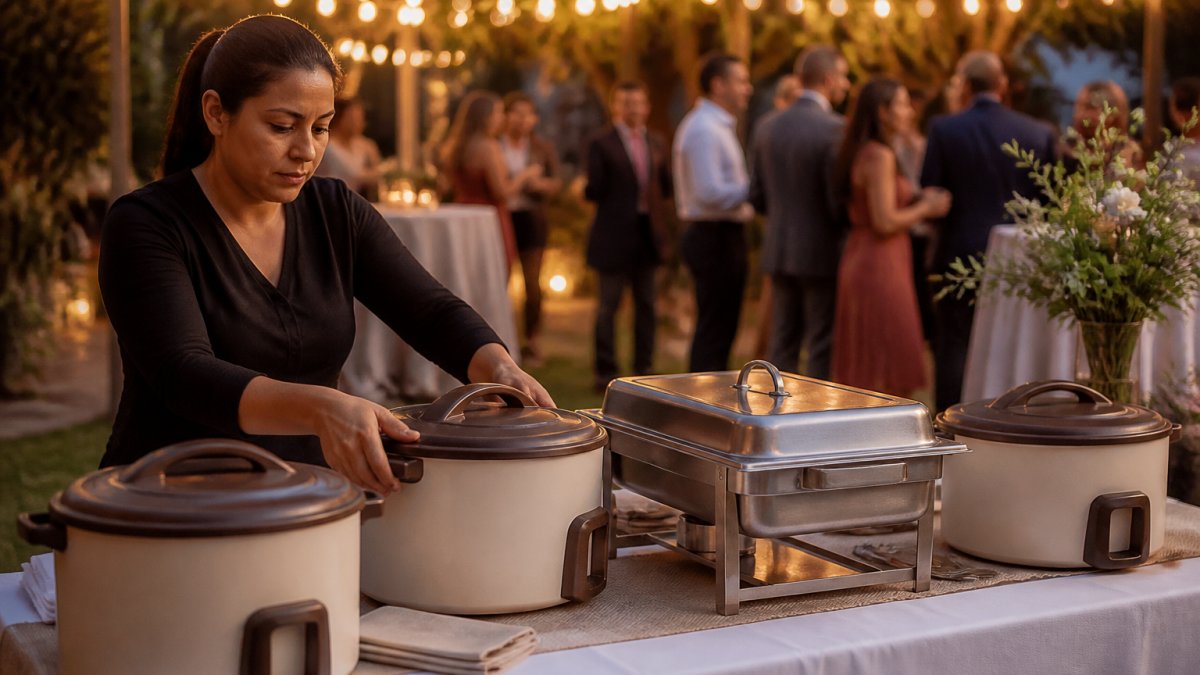
Follow this setup order:
- Preheat containers and chafing water 20 minutes ahead.
- Heat food to serving temperature in the kitchen.
- Transfer fast and cover immediately.
- Set up the buffet away from doors and wind.
- Label dishes and note the time they were placed out.
If you'd like a quote, you can request a quote.
Emergency and Off-Grid Scenarios: Keeping Food Warm During a Power Outage
During a power outage, insulation and fuel do the work. Move hot food into thermal containers right away, keep them closed, and use chafing fuel or a gas stove if you have one.
Practical steps for outages:
- Fill coolers and thermal carriers while food is still hot.
- Group containers together and wrap them in blankets.
- Avoid opening lids to check; use a thermometer through a small gap.
- Prioritize safety over perfect temperature. If food drops below 140°F for over two hours, toss it.
If you're also moving frozen or chilled items, our guide on how to transport frozen desserts without electricity covers the cold side of the same problem.
Planning an Electricity-Free Dessert Station for Your Next Event
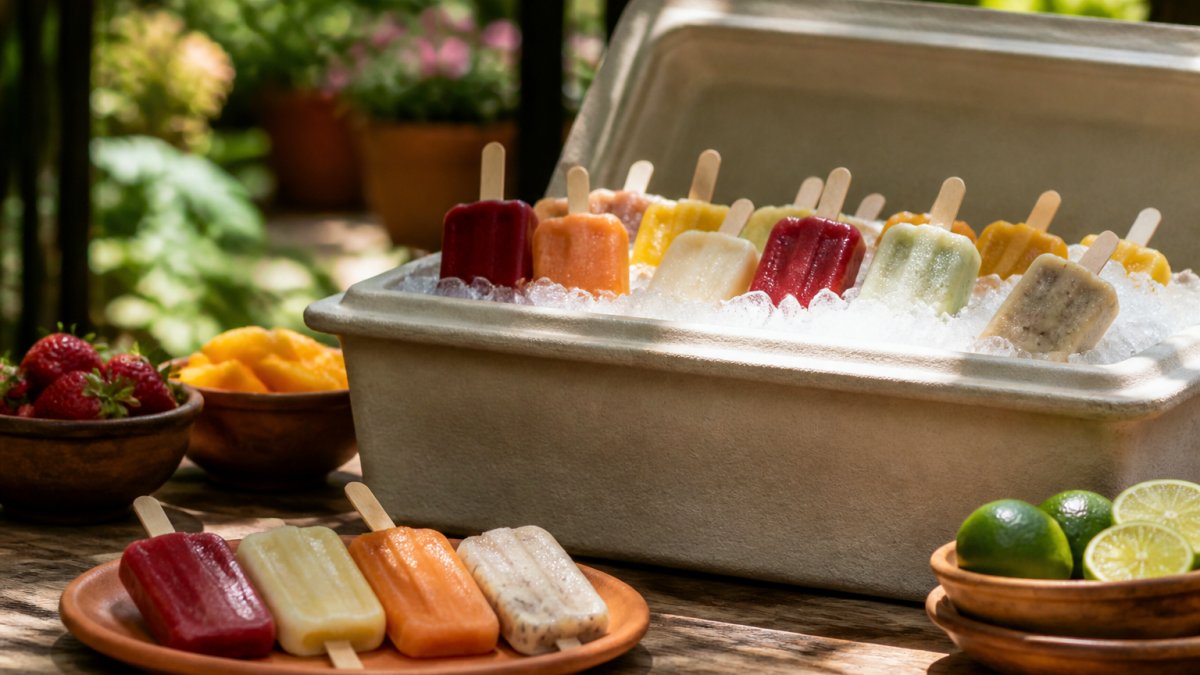
An electricity-free dessert station works when you plan around cold holding, not heat. Frozen and chilled treats need insulation, not warming, and that's where a well-built carrier changes everything.
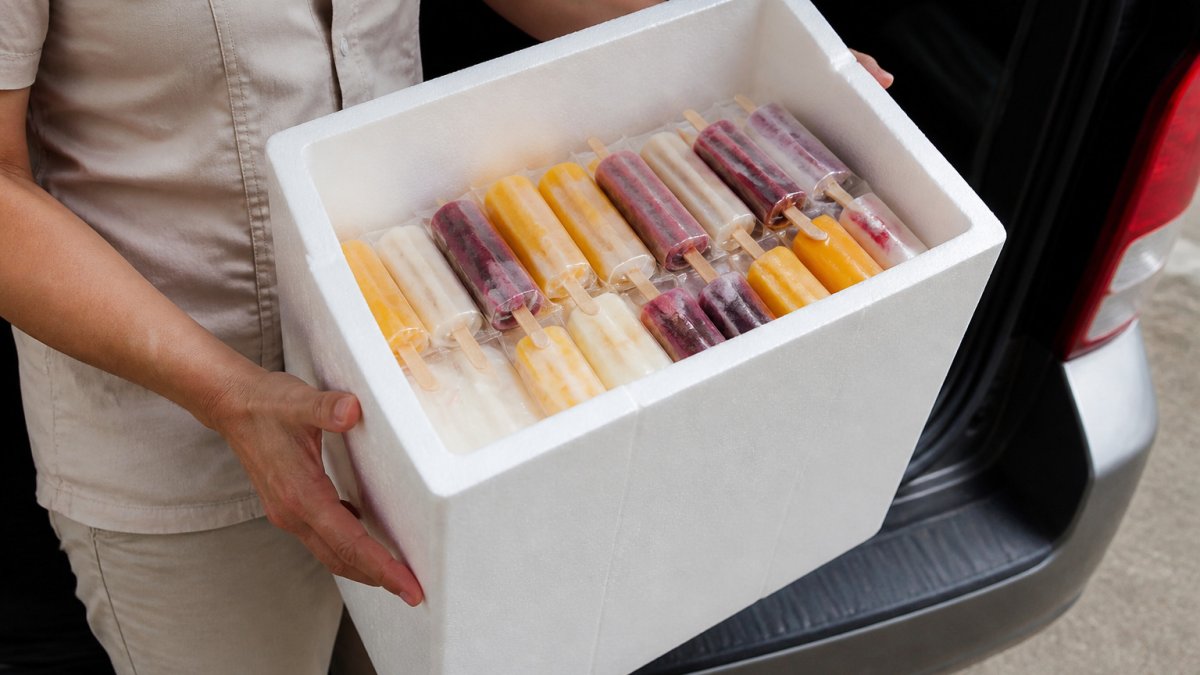
At Pepito's Paletas, our patented 8-hour frozen signature box delivers gourmet vegan paletas for an electricity-free catering experience.
Why hosts choose it:
- No power, no coolers. The signature box does the work.
- Made-to-order vegan paletas using traditional Mexican recipes.
- A minority woman-owned co-op that shares profits among members.
- Elegant enough for client dinners and luxury events.
To plan the treats themselves, browse our menu of gourmet paletas.
Keeping food warm without electricity is a planning problem, not a shopping problem.
Frequently Asked Questions
How can I keep food warm without electricity?
Use insulated serveware, thermal containers, chafing dishes with fuel canisters, or a hot-water bath. Preheat the container with hot water, wrap it in towels, and keep lids on to trap heat. For desserts and cold items, an insulated carrier works the same way in reverse. Pepito's Paletas offers a patented 8-hour frozen signature box for electricity-free catering.
What is the safest way to keep food warm without a power source?
Hold hot food at 140°F or above using a chafing dish with fuel, a preheated insulated container, or a hot-water bath. Use a food thermometer to check the internal temperature every hour. Discard food that drops below 140°F for more than two hours. Never reheat food in a chafing dish; reheat to 165°F first, then transfer to the warmer.
How long does food stay warm in an insulated container?
A quality insulated container keeps food above 140°F for about 2 to 4 hours if preheated and kept closed. Larger volumes hold heat longer than small portions. Opening the lid repeatedly shortens holding time. For events longer than four hours, plan to swap in fresh containers or use a fuel-based warmer as backup.
Can I keep desserts frozen without electricity at an outdoor event?
Yes. Pepito's Paletas offers made-to-order vegan paletas in a patented 8-hour frozen signature box for an elegant, electricity-free catering experience.